SaucerSwap is adding one-click swaps from HBAR or USDC into tokenized Robinhood stocks, routed across 21 chains through Sodax. Brian breaks down the three players involved, what you actually own with a tokenized stock, and why SAUCE holders should pay attention. He also covers the restriction that blocks US, UK, and Canadian users entirely.
▶ Watch VideoA full live breakdown of Bitcoin: what it is, why Satoshi built it in the middle of the 2008 banking crisis, and why its scripting language is deliberately limited for security. Covers the 21 million cap, the four-year halving schedule, lost supply, Lightning, and who holds BTC today across ETFs, corporate treasuries, and governments. Ends with the five metrics to track and an honest bear case before you buy.
▶ Watch VideoBrian walks through this week's market update from macro to micro, showing how the total crypto market cap, Bitcoin, and Ethereum have each closed weekly candles above their prior highs — breaking the bear market pattern of lower highs. He explains why Bitcoin dominance near 60% signaled no rotation, and why the OTHERS index MACD cross matters for altcoins. Quant, XLM, and Hedera are reviewed as early examples of altcoins starting to confirm the shift.
▶ Watch VideoA full breakdown of Ethereum before you buy: why it was built to run programs instead of just payments, how ETH issuance and fee burns interact, and what staking yield actually pays. Covers Ethereum's 53% DeFi dominance, the difference between TVL and TVS, rollups like Base and Arbitrum, and institutional adoption of tokenized assets. Closes with five ways the Ethereum thesis could break and why network adoption and token price don't always move together.
▶ Watch VideoQuant isn't a blockchain — it's a software company whose Overledger platform lets banks connect to multiple ledgers at once. Brian breaks down the products, the founder's background, the September 2026 Clearing House and UK banking news that sent QNT up roughly 300%, and the tokenomics behind its 14.6 million fixed supply. He also covers the harder question: how much enterprise adoption actually reaches the QNT token, plus the risks around closed-source code, a single director, and holder concentration.
▶ Watch VideoThis week's Monday market update walks from the total crypto market cap down to individual coins, showing how TOTAL, Bitcoin, and Ethereum have each closed above their previous weekly highs and broken the bear market pattern. Brian covers Bitcoin dominance near 60%, the ETH/BTC ratio turning up, on-balance volume confirmation, and volume profile zones on Ethereum. The update closes with the OTHERS altcoin chart and two movers of the week: Quant and Hedera.
▶ Watch VideoA weekly review of the total crypto market cap chart and the altcoin-only chart, covering what volume, MACD, and a deeply oversold RSI near 28 are signaling on the weekly timeframe. Also looks at why altcoins never reclaimed their 2021 high and what a return to that level would mean. Closes with Bitcoin and Ethereum sitting in the rainbow chart accumulation zone and why dollar cost averaging makes sense before the turn is confirmed.
▶ Watch VideoThe Genius Act and Clarity Act were never about giving consumers stablecoin yield — they were about deciding whether banks or exchanges keep it. This breakdown explains why neither side was advocating for you and where that treasury-backed yield actually stops. It also covers practical alternatives, from self-custody and DeFi to the short-term treasury strategy savers have used for decades.
▶ Watch VideoSaucerSwap (SAUCE) and Bonzo Finance (BONZO), the top DEX and lending protocol on Hedera, were both listed on Kraken in March 2026. This video breaks down what each protocol does, why their market caps and fully diluted values are unusually small, and why both have been consistently profitable. Also covers Dovu and PACK as additional Hedera-adjacent listings.
▶ Watch VideoMost copy traders pick a leader from a green equity curve and never check what that trader is actually holding. This walkthrough shows how to read the ongoing and history tabs on a copy trading leaderboard to spot traders who never close losing positions. Covers why percentage returns beat dollar profits, how tiny margins hide 500% drawdowns, and what reasonable leverage and risk management should look like.
▶ Watch VideoA full due diligence walkthrough of Internet Computer (ICP), covering canisters, cycles, token burning, governance, and the Definity Foundation's background. Brian breaks down what makes ICP structurally different from other layer 1 blockchains — including its ability to serve entire websites on chain — along with the tokenomics, inflation math, and known risks. Includes the 2021 launch history, current usage data, and where the weekly chart stands.
▶ Watch VideoA weekly chart breakdown of four indicators — total market cap, MACD, RSI, and volume — including the first green weekly MACD bar the market has printed in a long time. Also covers Bitcoin dominance and the ETH/BTC ratio as the two confirmations altcoin holders still need to see, plus why the Others index is running two weeks ahead. Includes a quick warning on judging copy traders by headline returns instead of open positions.
▶ Watch VideoA full weekly market update covering the four charts that signal whether crypto is turning bullish: total market cap, the OTHERS altcoin chart, ETH/BTC and Bitcoin dominance. Two of the four have flipped positive while two still await confirmation. Also breaks down Bitcoin's daily volume profile, the 200-day moving average, and the macro factors that could push the market higher.
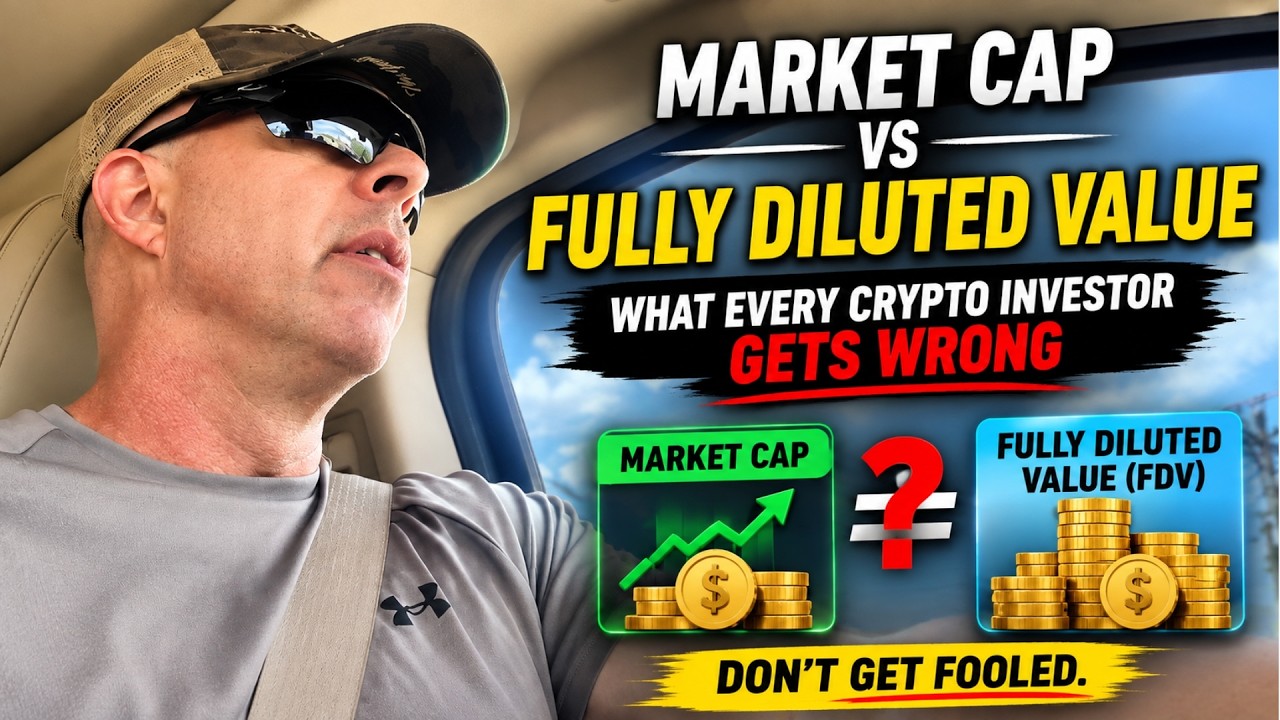
▶ Watch VideoHedera is releasing roughly 4 billion additional HBAR in Q2 2026, and traders are panicking about a price crash. This video explains the difference between market cap and fully diluted value, and why FDV is the metric institutions actually use to compare tokens. It also walks through the ONDO unlock of January 2025, where circulating supply tripled and the price stayed essentially flat.
▶ Watch VideoBrian walks through a free copy trading profit calculator, using a real lead trader's public 90-day stats to estimate what a $1,000 deposit could return after profit sharing and trading fees. He explains what copy trading is, how lead traders earn a cut of your gains, and which profile metrics actually matter. The video also covers why projections are estimates only and why you should spread capital across multiple traders and review performance weekly.
▶ Watch VideoBrian explains the due diligence process he uses on crypto projects — identifying what stage a project is in, who is behind it, how consistently the team communicates, and whether the public roadmap keeps advancing. He uses Saucer Swap and Bonzo Finance on Hedera as examples of transparent communication, community feedback loops, and measurable usage. He also covers the warning sign of a project that suddenly stops communicating.
▶ Watch VideoBrian breaks down where copy trading fits among the four main ways to earn with crypto, then walks live through a real exchange to show how to evaluate lead traders using ROI, max drawdown, win rate, trading history and leverage. He also explains fixed amount versus multiplier copying, stop losses, and isolated versus cross margin. A practical starting point for anyone curious about copy trading on Bitunix, BTCC or MEXC.
▶ Watch VideoBitcoin is grinding lower while the altcoin side of the market holds sideways — and the total market cap chart hides that divergence because Bitcoin is 60% of it. This weekly update breaks down the others index, weekly MACD momentum, and volume profile support zones on BTC and ETH. Also covered: the ETH/BTC ratio as a rotation signal and the CFTC's first approved US Bitcoin perpetuals contract.
▶ Watch VideoBrian demonstrates a crypto trading bot running live on an exchange with real money — built entirely with AI, without writing a line of code by hand. He walks through the full process: backtesting across 16 months, 50+ cryptocurrencies and eight timeframes, then paper trading on a live exchange before going live. The video also covers the pitfalls most people miss, including slippage, execution validation, and knowing when the AI is guessing instead of using real data.
▶ Watch VideoA live Crypto School investing session breaking down four coins during a market-wide drop: Aerodrome, Hyperliquid, Bitcoin and Ethereum. Covers why the altcoin chart held up better than total market cap, why decentralized exchanges stand out as a revenue-generating category, and where volume profile puts fair value for BTC and ETH. Includes how to think about dollar-cost averaging when sentiment is negative.
▶ Watch VideoMost people only know one way to earn with crypto: buy and hold. This video breaks down all four methods — long-term investing (including IRA accounts), active trading with indicators, DeFi yield through liquidity pools, lending and staking, and copy trading. Each approach is explained with its real time commitment, tooling, and risk considerations.
▶ Watch VideoWeekly crypto market update covering the bad, the good, and the potentially great. Total market cap and Bitcoin remain in a weekly bear structure, but the others chart shows altcoins holding sideways with a MACD crossover that hasn't flipped down. Also breaks down Bitcoin dominance, the ETH/BTC ratio, Ethereum's $1,600 volume node, and why falling oil prices could be the macro lever that changes everything.
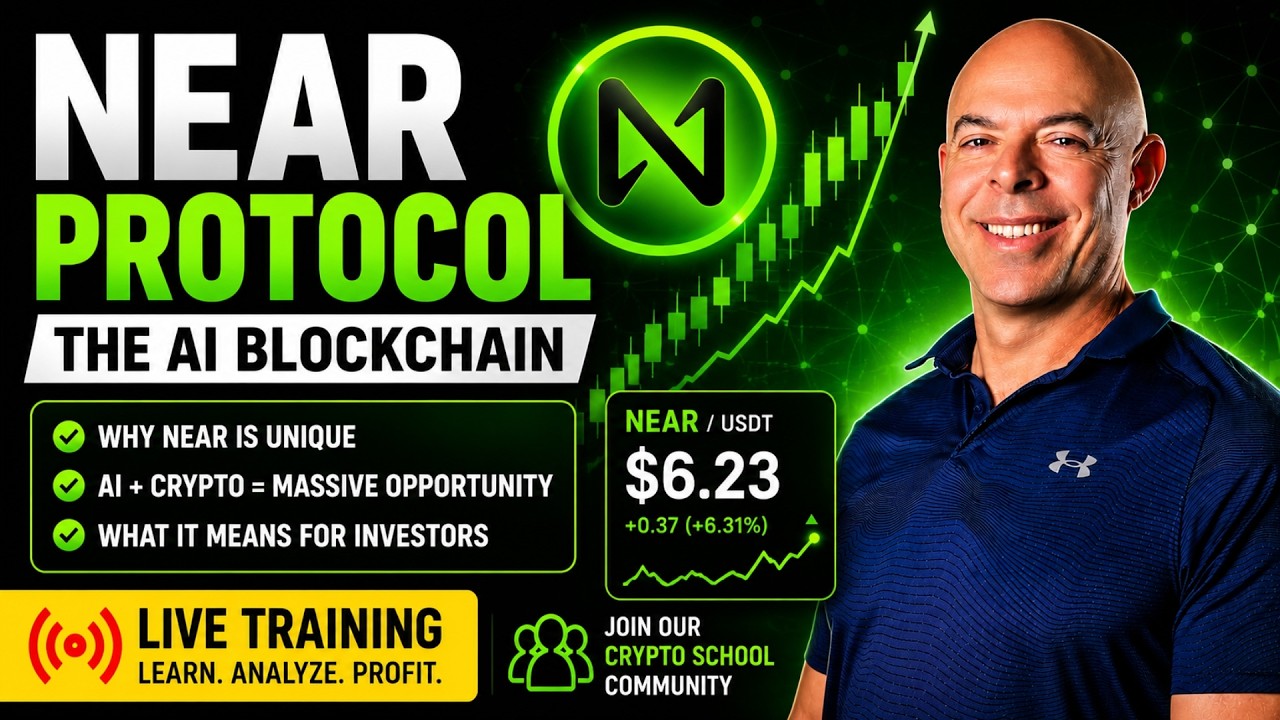
▶ Watch VideoNEAR started as an AI project in 2017-2018 that paused to build the infrastructure it needed first — becoming a layer 1 designed around AI rather than rebranded for it. Brian breaks down the three pieces built on top: Ironclaw for private agent access, NEAR AI Cloud for confidential model execution, and an agent marketplace where AI hires AI. He closes with a look at NEAR's price history and why he finds the agent economy closer than most people realize.
▶ Watch VideoA complete beginner walkthrough of buying your first Bitcoin on Coinbase, from account creation and KYC verification to enabling two-factor authentication and funding by bank transfer. Learn why the advanced trade screen costs significantly less in fees than the simple buy button, and how market orders differ from limit orders. The video finishes by covering self-custody, the 12-word recovery phrase, and how to move Bitcoin between a wallet and an exchange without sending it to the wrong network.
▶ Watch VideoHedera's Governing Council members — including Google, IBM, Dell, Boeing and FedEx — now run all of the network's consensus nodes, with Hedera itself stepping back. Brian explains how the 39-seat council works, why seats are spread across industries, and how the expert council model compares to dictator-style control and token-weighted voting. A look at what this milestone signals for enterprise-grade decentralization.
▶ Watch VideoBrian walks through the free portfolio allocator calculator on CryptoSchool.cc and shows how to split capital across multiple crypto copy traders. Using real trader data — ROI, max drawdown, win rate, and profit share — he compares four allocation methods: risk-adjusted, equal split, ROI-weighted, and conservative. A practical look at why two traders with the same return can deserve very different position sizes.
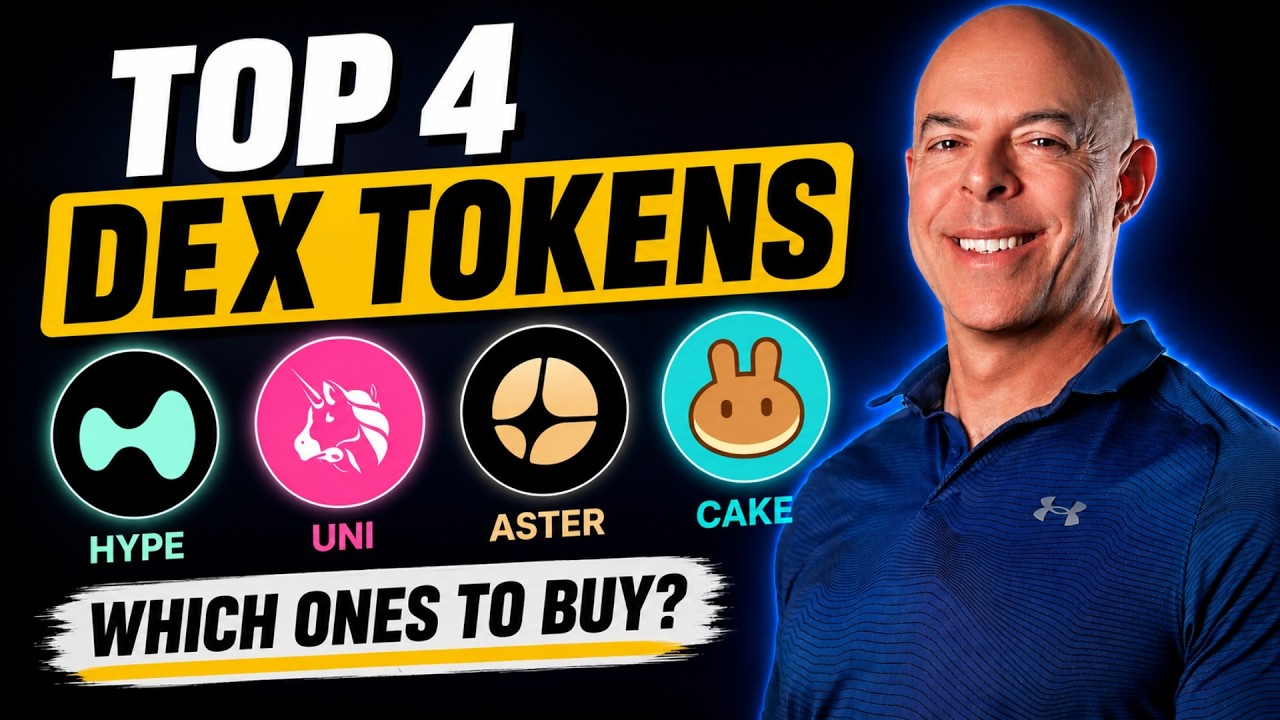
▶ Watch VideoA breakdown of four major decentralized exchange tokens — Hyperliquid, Uniswap, Aster, and PancakeSwap — compared by fully diluted value and annualized revenue rather than market cap. The video explains why token value capture through buybacks, burns, and revenue sharing matters more than governance rights alone. It also covers how to diversify within a single crypto category instead of betting on one name.
▶ Watch VideoCrypto-backed loans have always carried liquidation risk — if your collateral drops, the protocol sells it. This Friday DeFi session breaks down a new volatility-proof loan product from Strike that removes price-based liquidation entirely, plus how crypto lines of credit work. Learn why borrowing against crypto avoids taxable events and what the trade-offs are.
▶ Watch VideoA walkthrough of how to evaluate a single lead trader before copying them, using real Bitunix stats and two free calculators. Covers projecting take-home profit after fees and profit sharing, then stress-testing drawdown to see how many consecutive losses your account could survive. Also looks at leverage discipline and market focus as trader quality signals.
▶ Watch VideoA plain-English breakdown of how passive income works in crypto, using bank and stock analogies to explain lending protocols, staking, and treasury-backed yield. Covers why someone has to be paying the borrow for your yield to be real, and why triple-digit APYs were usually token printing in disguise. Closes with the case for diversifying into crypto as an early adopter — not as financial advice, but as a reason to learn.
▶ Watch VideoA full breakdown of NEAR as an AI infrastructure play, covering why its category as an AI-specific layer one matters, the agentic economy thesis, and the three products behind it. Includes a look at token supply, market cap versus fully diluted value, usage KPIs, pending spot ETF filings, and the chart structure from current levels. Educational only — not financial advice.
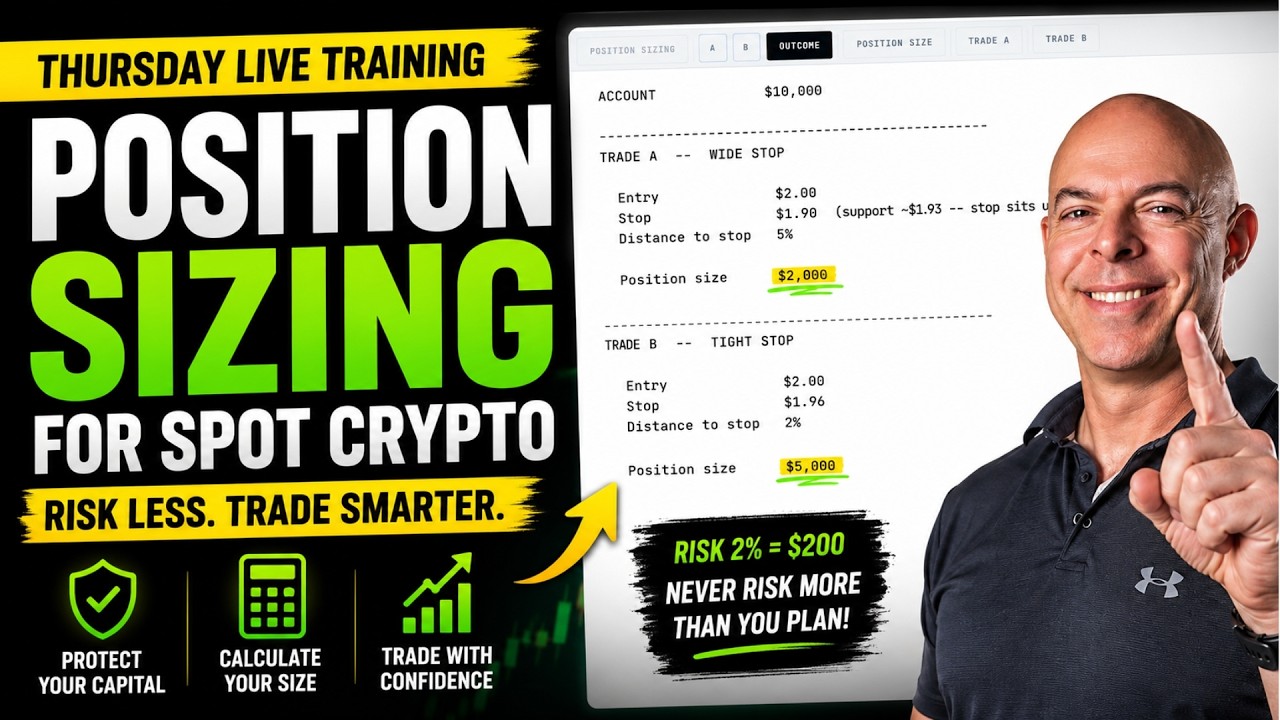
▶ Watch VideoA live Crypto School training on how to calculate position size for spot crypto trades using account size, risk percentage, and distance to your stop loss. Two example trades show why a $5,000 position with a tight stop carries exactly the same risk as a $2,000 position with a wide stop. Includes the full formula and how to turn it into a reusable spreadsheet.
▶ Watch VideoA data-driven walkthrough of Bitcoin's four-year cycle using the three completed cycles as a reference: bear markets averaging 371 days, shrinking upside multiples, and drawdowns of 87%, 84%, and 78%. Applied to the October 6, 2025 peak, the averages point to a bottom around mid-October 2026 — roughly 75 days out. Also covers the 200-week moving average, ETF-driven demand, front-running, and how DCA versus ladder bids compare.
▶ Watch VideoBrian walks through why most traders size their trades backwards — picking a position size first and figuring out the stop loss later. This live training shows how to read chart structure to place a stop, then use a simple four-step formula to calculate position size from the stop distance. Includes a pre-trade checklist for keeping every loss within your planned risk.
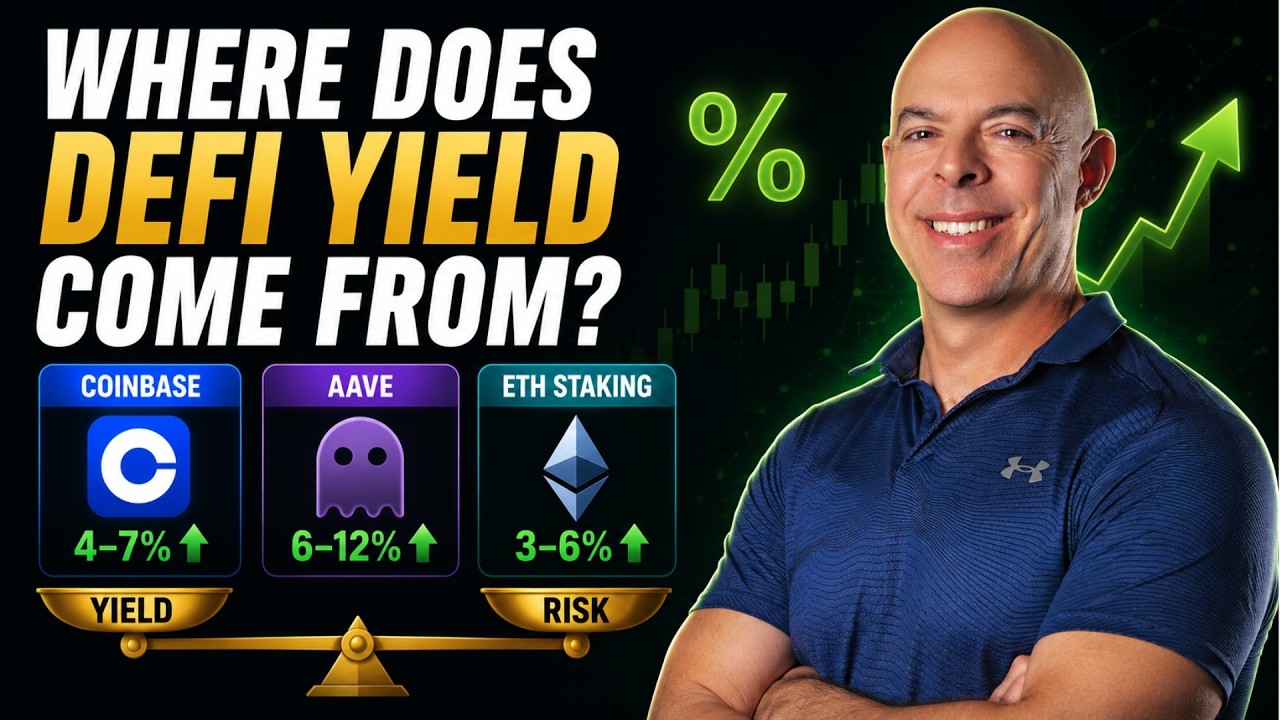
▶ Watch VideoBrian breaks down where crypto yield actually comes from by comparing three sources side by side: Coinbase USDC lending, Aave supply rates, and Ethereum staking. He explains the hidden layers behind Coinbase's 7% rate, why Aave's spread is so much tighter than a bank's, and how validator rewards have compressed to 2.8%. The session closes with a calculator showing why being paid in dollars versus being paid in ETH changes your outcome entirely.
▶ Watch VideoA full Monday market update walking through total crypto market cap, Bitcoin dominance, the ETH/BTC ratio, and the Others chart on weekly timeframes. Brian then breaks down five signals worth watching — global M2 money supply divergence, ISM manufacturing data, fear and greed, altcoin season, and Bitcoin seasonality — plus why Wyckoff overlays get interpreted so differently. The conclusion: structure is still bearish, but conditions are improving, which favors dollar-cost averaging over bottom-picking.
▶ Watch VideoA firsthand look at the dot-com era from someone who built internet advertising software before most people believed the web would last — and why the same dismissals are being aimed at crypto today. The video explains why individual cryptocurrencies should be analyzed by sector the way stocks are, and makes the case for treating a small allocation as ordinary diversification rather than a conviction bet. It closes with the two practical routes for holding crypto inside a retirement account: spot ETFs, or a self-directed IRA that allows individual coins.
▶ Watch VideoAave runs two versions side by side, and picking the wrong one can cost you on borrowing rates. This live session compares V3's siloed pools and single flat rate against V4 Pro's shared liquidity hub and variable rate ranges, using real USDC market data. Brian also walks through utilization curves, pool depth, loan-to-value, liquidation thresholds, and why he's staying on V3 for borrowing right now.
▶ Watch VideoA protocol can generate millions in fees and pass none of it to token holders. This live training breaks down the three mechanisms that connect revenue to your token — buybacks, burns, and governance — and why announcements often don't match execution. Brian also covers real yield vs. printed yield, five value-capture red flags, and how to build a crypto version of P/E using fully diluted value.
▶ Watch VideoThe Dow sits at all-time highs near 54,000 while crypto remains stuck in a weekly downtrend of lower highs and lower lows. Brian walks through total market cap levels, Bitcoin dominance at 60%, the ETH/BTC ratio, on-balance volume, and the death cross that just printed on Bitcoin's daily chart. He also covers the 371-day average cycle bottom timing and why altcoin selectivity matters more than broad exposure.
▶ Watch VideoWealthy investors rarely sell appreciated assets — they borrow against them to avoid triggering capital gains taxes. This video explains how crypto lets ordinary holders do the same thing, borrowing against Bitcoin or Ethereum with no credit check and, in many cases, no required monthly payment. It also covers the overcollateralization, loan-to-value limits, and liquidation thresholds you need to understand before trying it.
▶ Watch VideoMarket cap is the most quoted number in crypto — and the one most investors misread. This video breaks down the difference between market cap and fully diluted value using a simple two-token example where identical projects appear five times apart in value. Learn why institutional investors compare on FDV and what supply schedules, cliffs, and token allocations reveal before you buy.
▶ Watch VideoMost crypto content online is built to pump meme coins, which makes it useless for anyone investing methodically. This video explains the difference between utility coins like Bitcoin and Ethereum and tokens with no business underneath them. It also lays out how to evaluate crypto the same way you'd evaluate a stock — by sector, market cap versus fully diluted value, revenue, and yield.
▶ Watch VideoA full breakdown of Solana as a layer 1 blockchain, including how proof of history works, why it keeps execution and settlement on one chain, and how that compares to Ethereum's layer 2 approach. Covers the network's outage history, fee and volume data, the memecoin problem, spot ETFs, and what's actually built on the chain. Ends with four questions to ask before buying SOL, plus the honest bull and bear cases.
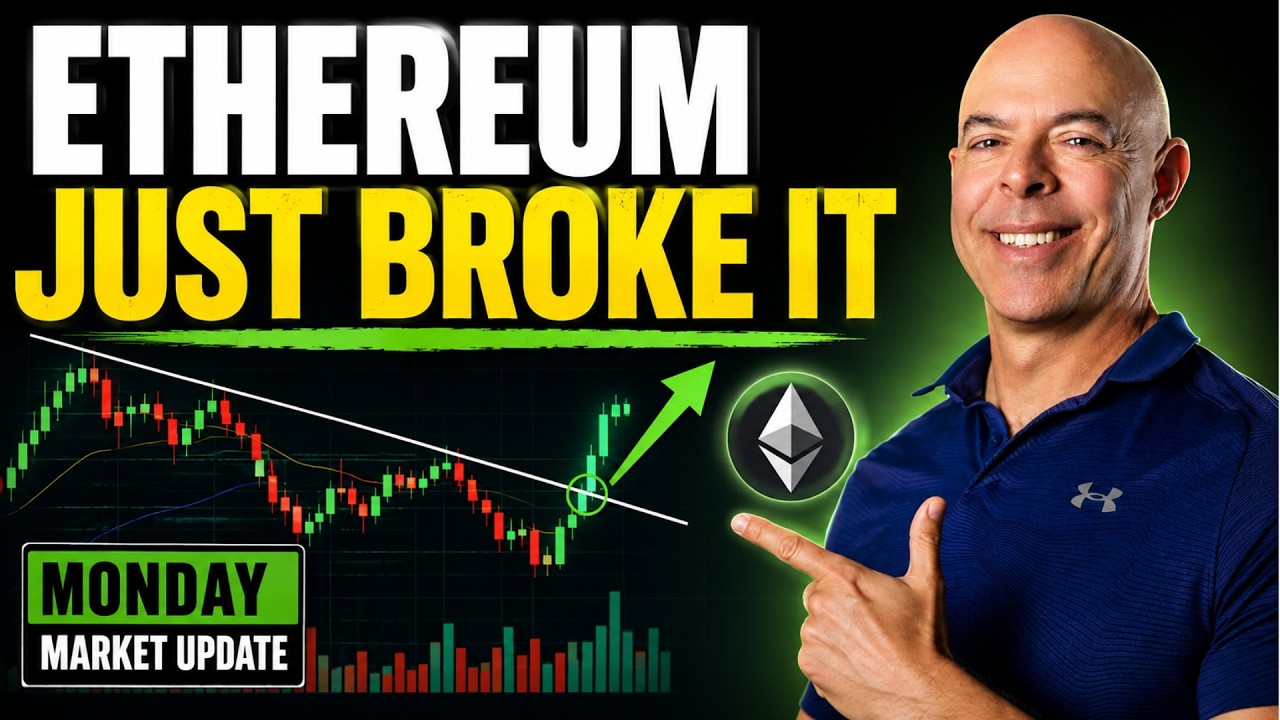
▶ Watch VideoEthereum's weekly chart closed above its last swing high, breaking the lower-high, lower-low bear market pattern for the first time this cycle. This Monday market update walks through TOTAL, Bitcoin dominance near 60%, the ETH/BTC ratio, and the OTHERS altcoin chart. Brian explains why volume still needs to confirm the move and why dollar cost averaging beats trying to pick a bottom.
▶ Watch VideoCrypto isn't as foreign as it looks — if you already evaluate stocks by sector and metrics, the same framework applies here. This video uses Ethereum to explain crypto's version of fundamentals, including total value locked, layer 2 rollups, and the carpool analogy behind them. It also covers institutional tokenization by firms like BlackRock and why position sizing remains a personal decision.
▶ Watch VideoMost people skip Bitcoin because the price sounds like a lot of money to them personally — but that's a frame of reference, not a valuation. This video breaks down the difference between what you can afford and what something is actually worth. Learn why unit price tells you almost nothing and how to evaluate crypto the same way you'd evaluate any other investment.
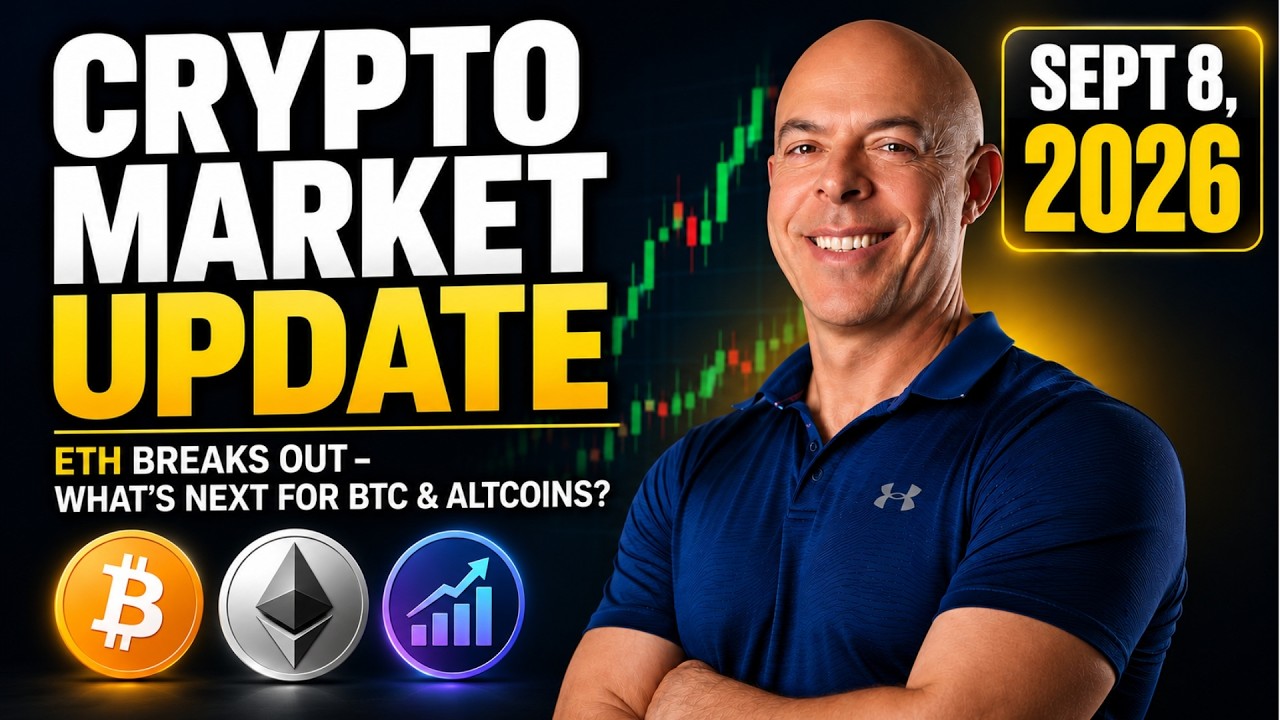
▶ Watch VideoA top-down weekly market review covering macro conditions, total crypto market cap, Bitcoin, Ethereum and the altcoin 'others' index. Ethereum has closed above its prior swing high and invalidated its weekly bear market structure while Bitcoin still hasn't reached that level. The update also flags a volume divergence in altcoins that could mean a pullback before any sustained move.
▶ Watch VideoThis week's macro-to-micro market review covers oil above $100, total crypto market cap near $2.65 trillion, and Bitcoin dominance stuck at 60% for 13 months. Ethereum has now closed four weekly candles above its prior swing high, technically breaking the bear pattern that Bitcoin and the total market have not. Altcoin momentum looks strong on MACD, but on-balance volume is declining into the rally — a divergence worth respecting before adding exposure.
▶ Watch VideoThe weekly market update starts macro with the Dow above 50,000 and oil futures near $92, then works down into crypto. Total market cap closed above its prior weekly high for the first time in months, breaking the lower-high, lower-low bear pattern, with the weekly MACD crossed up and holding. Bitcoin dominance flat near 60% suggests altcoins are rising with Bitcoin, though on-balance volume still needs to confirm the move.
▶ Watch VideoA full breakdown of Hedera and the HBAR token — why hashgraph is a directed acyclic graph rather than a blockchain, how gossip about gossip and virtual voting reach consensus, and what the 34-member governing council actually controls. Covers HBAR's fixed 50 billion supply, why fees are priced in dollars but paid in HBAR, and why fully diluted value matters more than market cap. Closes with the ecosystem (Saucer Swap, Bonzo Finance), the US spot ETF, and a look at the weekly chart.
▶ Watch VideoA look inside a daily crypto school update covering two DeFi protocols on Coinbase's Base network: Aerodrome (the leading DEX) and Morpho (the leading borrow/lend protocol across 32 chains). Aerodrome is trading around $0.30 after a high near $2.30, while Morpho is near $1.00 after reaching $3.80 — both analyzed as potential rotation targets during the current market downturn. Part of an ongoing series on building an optimal DeFi-focused portfolio ahead of a potential market recovery.
▶ Watch VideoThe IRS's new 1099-DA digital asset form is arriving with missing or incorrect cost basis data — which means crypto holders could significantly overpay taxes unless they can document their actual purchase prices. This video explains why cost basis is so hard to track across DeFi, multi-wallet, and multi-year activity, and introduces Count on Sheep, a forensic crypto accounting service founded by former Big Four accountants that reconstructs transaction history and produces Form 8949 and Schedule D for tax filing.
▶ Watch VideoAltcoins are sitting at market cap levels not seen since 2022, and two TradingView charts most investors have never heard of are flashing the same signal. Brian breaks down OTHERS and Total2ES — what they measure, why they matter, and what current RSI readings on the weekly chart may be telling us about where the altcoin market goes next.
▶ Watch VideoThe GENIUS Act already banned stablecoin yield for consumers — and the CLARITY Act won't bring it back. Brian breaks down what both bills actually say, why crypto exchanges and banks are on the same side, and what you can do right now to capture that yield yourself.
▶ Watch VideoInstead of speculating about what FedEx joining the Hedera Governing Council means, Brian goes straight to the source — a recorded conversation between the FedEx council representative and Hedera co-founder Mance Harmon. The FedEx rep explains in specific technical terms exactly what capabilities drew them to Hedera and why the governance model matters for global supply chains.
▶ Watch VideoA walkthrough of copy trading on BTCC, Bitunix, and MEXC — including step-by-step setup for each exchange. Covers how to select lead traders, configure copy trading settings correctly, and avoid the most common beginner mistakes.
▶ Watch VideoRipple quietly shifted from a cross-border payments company to a financial infrastructure rollup, spending over $2.25 billion acquiring companies like Hidden Road and G Treasury in 2025. This video breaks down the history of Ripple vs XRP, how the escrow mechanism funds Ripple's acquisitions, and what the strategic pivot could mean for XRP holders long-term. Two clear scenarios are laid out — one where XRP benefits from forced institutional adoption, and one where it doesn't.
▶ Watch VideoFour under-the-radar Hedera developments covered in one update: FedEx joining the governing council, a new AI agent payment integration enabling autonomous on-chain transactions, nearly $100 million in HBAR spot ETF inflows since October 2025, and Hederacon 2026 coming to Miami Beach in May. Despite HBAR's price pullback from its cycle high, the fundamentals behind enterprise adoption and institutional accumulation continue to develop quietly.
▶ Watch VideoThe total crypto market weekly chart has broken into bear structure with lower lows, weak volume, and a deteriorating MACD — but two rainbow charts tell a more complicated story. Bitcoin peaked around $120K and Ethereum near $5K, yet neither reached the historically overbought zones seen at the top of the 2017 and 2021 cycles. The video breaks down what that contradiction means for whether this bull market has actually peaked or still has room to run.
▶ Watch VideoApplying the same capital-required-to-move-price framework from a prior Bitcoin/XRP/HBAR analysis to Hedera's two leading DeFi protocols: Saucer Swap (the top DEX on Hedera) and Bonzo Finance (the top lending protocol). The estimates show it would take as little as $650K–$2M to double Saucer Swap's price and under $600K to double Bonzo's — amounts the video describes as negligible relative to traditional asset markets. Includes a warning about CoinGecko showing incorrect pricing for both tokens and explains how to find accurate data from the protocols directly.
▶ Watch VideoA market cap-based analysis comparing Bitcoin (~$1.5T), XRP (~$93B), and HBAR (~$4B) to show how much capital is actually required to double each asset's price — and why the differences are staggering. Estimated capital to double HBAR is $160–400 million versus $8–16 billion for XRP and $75–300 billion for Bitcoin, making smaller-cap assets capable of large percentage moves on far smaller inflows. The video frames this within the broader context of crypto's $2.5 trillion total market cap versus gold's $34.5 trillion, arguing there is still significant room for capital rotation to drive outsized gains.
▶ Watch VideoA capital-flow analysis comparing what it actually takes to double the price of gold ($8–17 trillion) versus Bitcoin ($75–300 billion) versus smaller altcoins — making the structural case that high-multiple crypto gains are still possible given how small the total crypto market cap ($2.5T) is relative to gold alone ($34.5T). The video argues that even modest capital rotation from traditional assets into crypto could produce the kind of dramatic alt season moves that many investors currently believe are behind us.
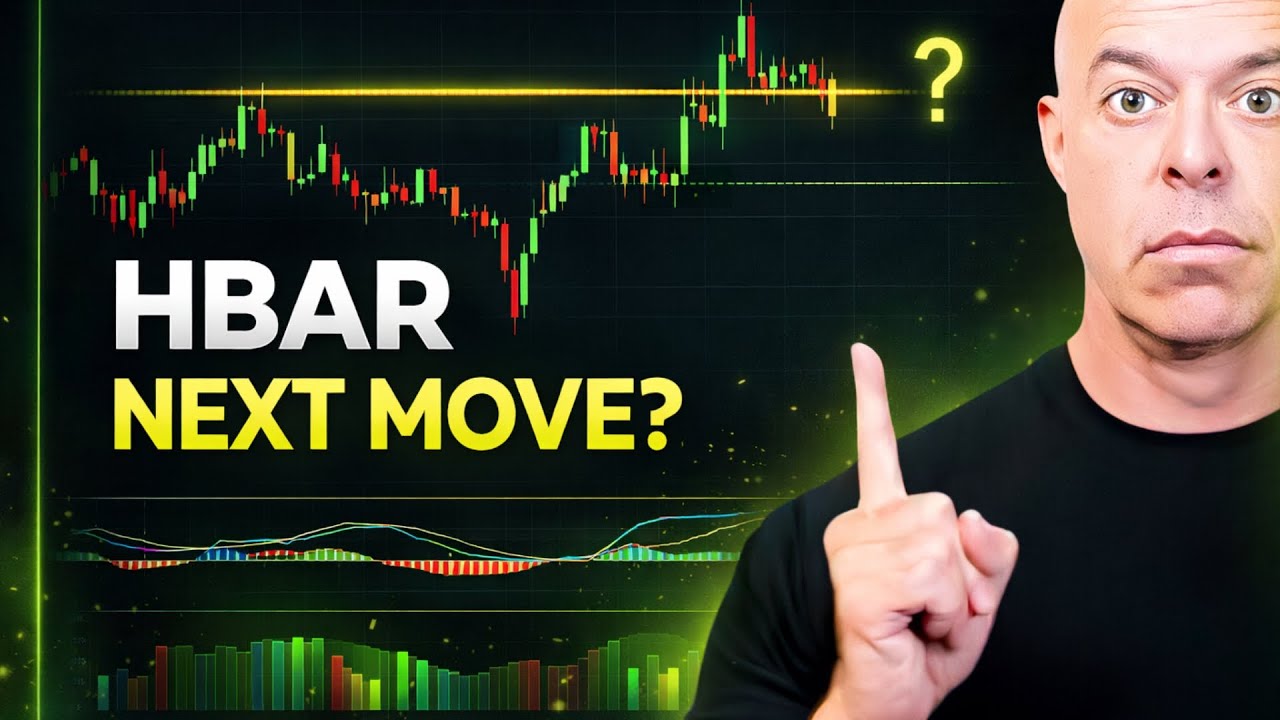
▶ Watch VideoA weekly chart analysis of HBAR following its run from 4 cents to 40 cents and subsequent pullback to around 10 cents, using MACD and RSI to assess where momentum may be heading next. The MACD histogram has shifted from dark red to lighter red with converging lines suggesting a potential crossover, while RSI sits at historically low levels — a combination that raises the probability of a reversal without guaranteeing one. The 40-cent level is identified as the key threshold: once cleared, every current HBAR holder would be in profit for the first time, removing significant overhead supply.
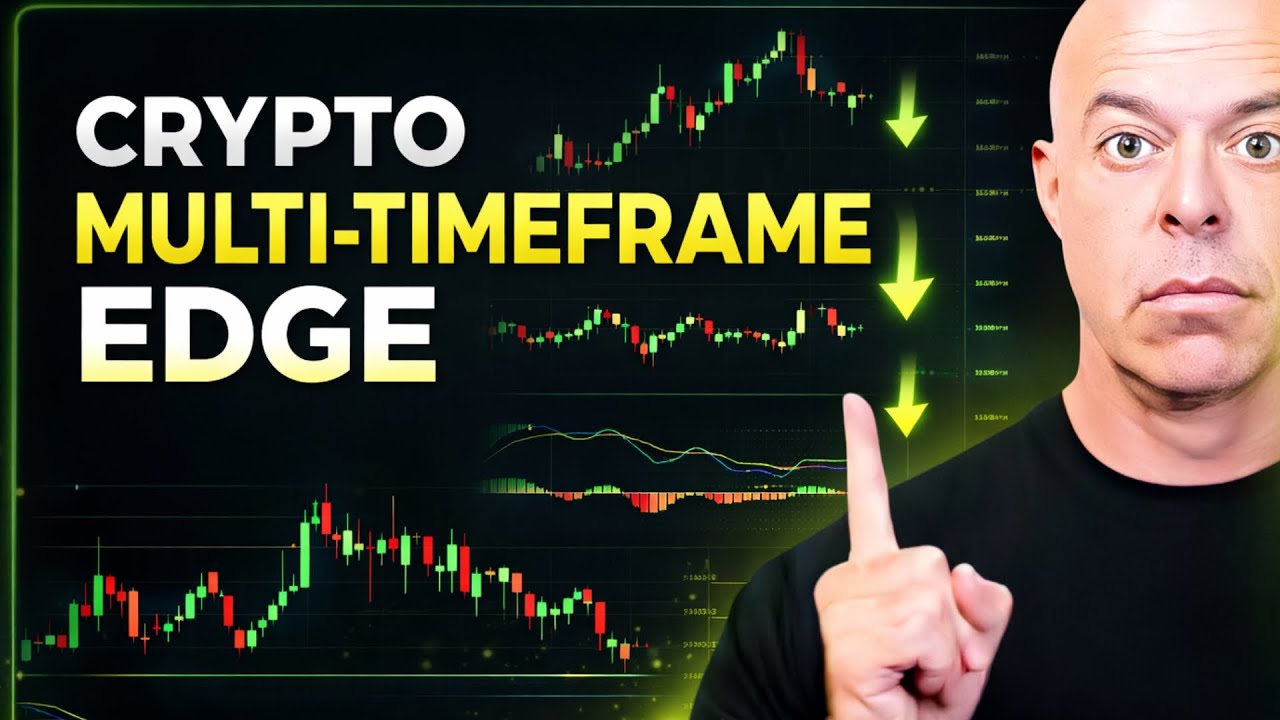
▶ Watch VideoA practical walkthrough of the top-down multi-timeframe analysis process that experienced traders use before every entry — starting with the total crypto market on the weekly, drilling through daily, 4-hour, 1-hour, 30-minute, and down to the 3-minute chart to check whether momentum is aligned or conflicting across timeframes. The video demonstrates the process live on the total market and XLM, explaining how to use MACD histogram color and size, RSI levels, and volume to determine whether you're entering early in a move or chasing its tail.
▶ Watch VideoTwo clips from Coinbase CEO Brian Armstrong at a financial conference, covering five clear explanations of why crypto is different from traditional banking: why crypto platforms with full reserves aren't banks, why Bitcoin functions as a macro check on deficit spending, and why Bitcoin has no issuer — making it structurally more independent than any central bank. The video ends with Armstrong correcting a banking industry representative who didn't know Bitcoin has no private issuer, illustrating how early the world still is in understanding what Bitcoin actually is.
▶ Watch VideoThe total crypto market gained roughly 10% in two days while most altcoins barely moved — this video explains why, using Bitcoin dominance, the ETH/BTC ratio, and total market MACD to show that the capital rotation sequence (Bitcoin → Ethereum → large-cap altcoins → small caps) simply hasn't reached altcoins yet. Bitcoin currently represents about 60% of market cap and is leading the move, with Ethereum matching it at similar percentages, meaning altcoins are still waiting for Ethereum to start outperforming Bitcoin before their rotation begins.
▶ Watch VideoAn overview of the premium trading level inside the Crypto School, covering its three core components: a 13-video intraday trading framework that explains the logic behind entries, a capital management course covering position sizing and leverage rules, and a custom TradingView script that generates buy/sell/close signals matched to the course logic. BTCC is used as the execution exchange, with a demo trading account available for testing strategies before risking real capital, and a 7-day free trial gives full access to all three courses.
▶ Watch VideoAn update on Saucer Swap ($SAUCE) — the #1 decentralized exchange on Hedera by volume — covering five recent developments that drove additional buying at current prices: a major website redesign, launch of iOS and Android mobile apps, addition of Wrapped Bitcoin and Wrapped Ethereum, strong tokenomics with 87% of supply in circulation and 45% staked, and consistent quarterly profitability since launch despite a fully diluted market cap of only ~$21 million. The video also includes DeFi Llama data showing Saucer Swap has generated positive earnings every quarter since 2023 — described as genuinely unusual in the DeFi space.
▶ Watch Video